Historical Railroad Structures you can still see in the southwestern United States
Alamogordo & Sacramento mountain railroad
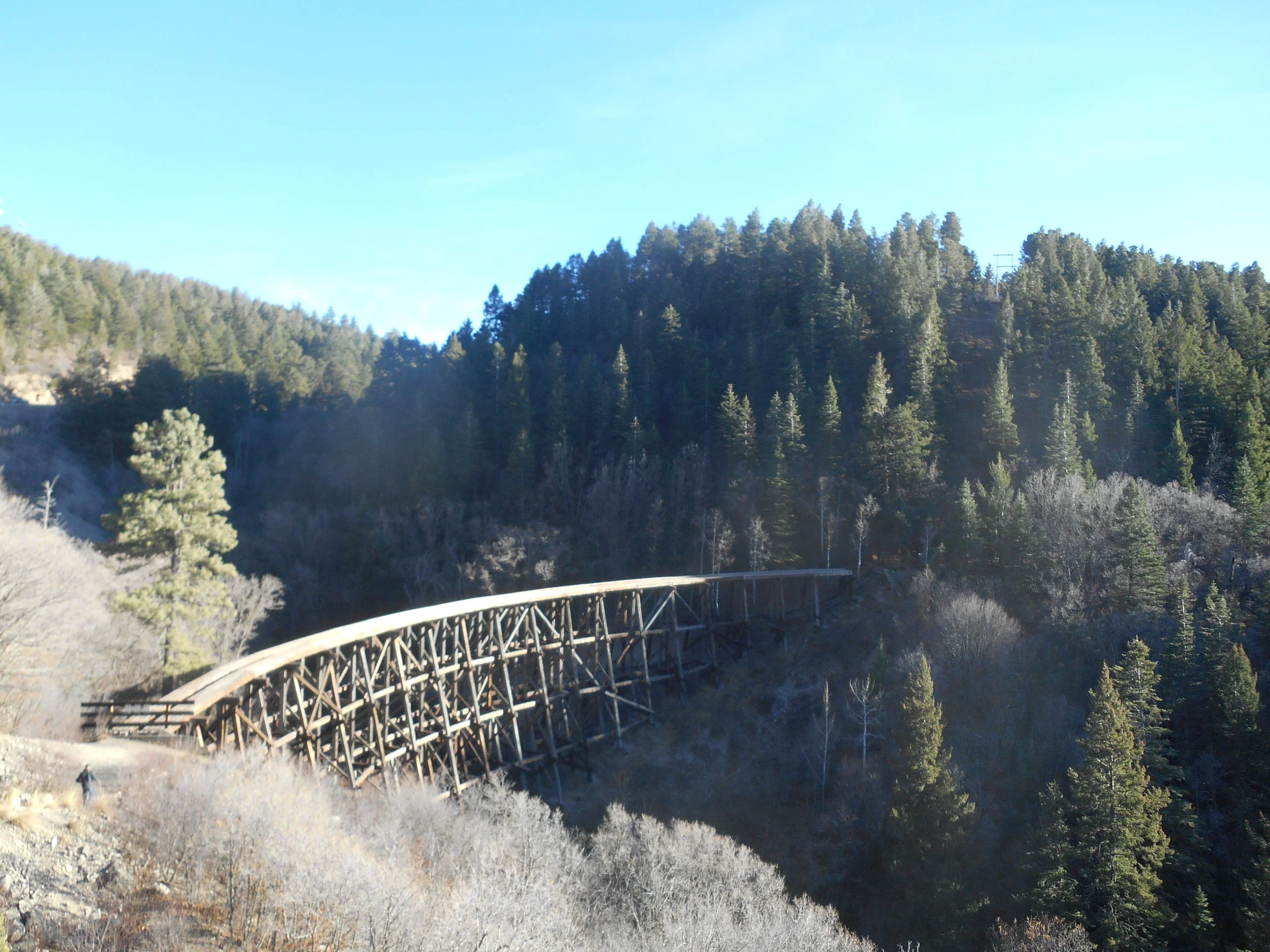
Mexican Canyon Tressle
An iconic structure easily visible on the highway between Alamogodo, New Mexico and Cloudcroft, New Mexico. Constructed by the Alamogordo & Sacramento Mountain Railroad and several photos were taken of the tressle with passing trains while the line was in service. Photo by Robby Peartree.
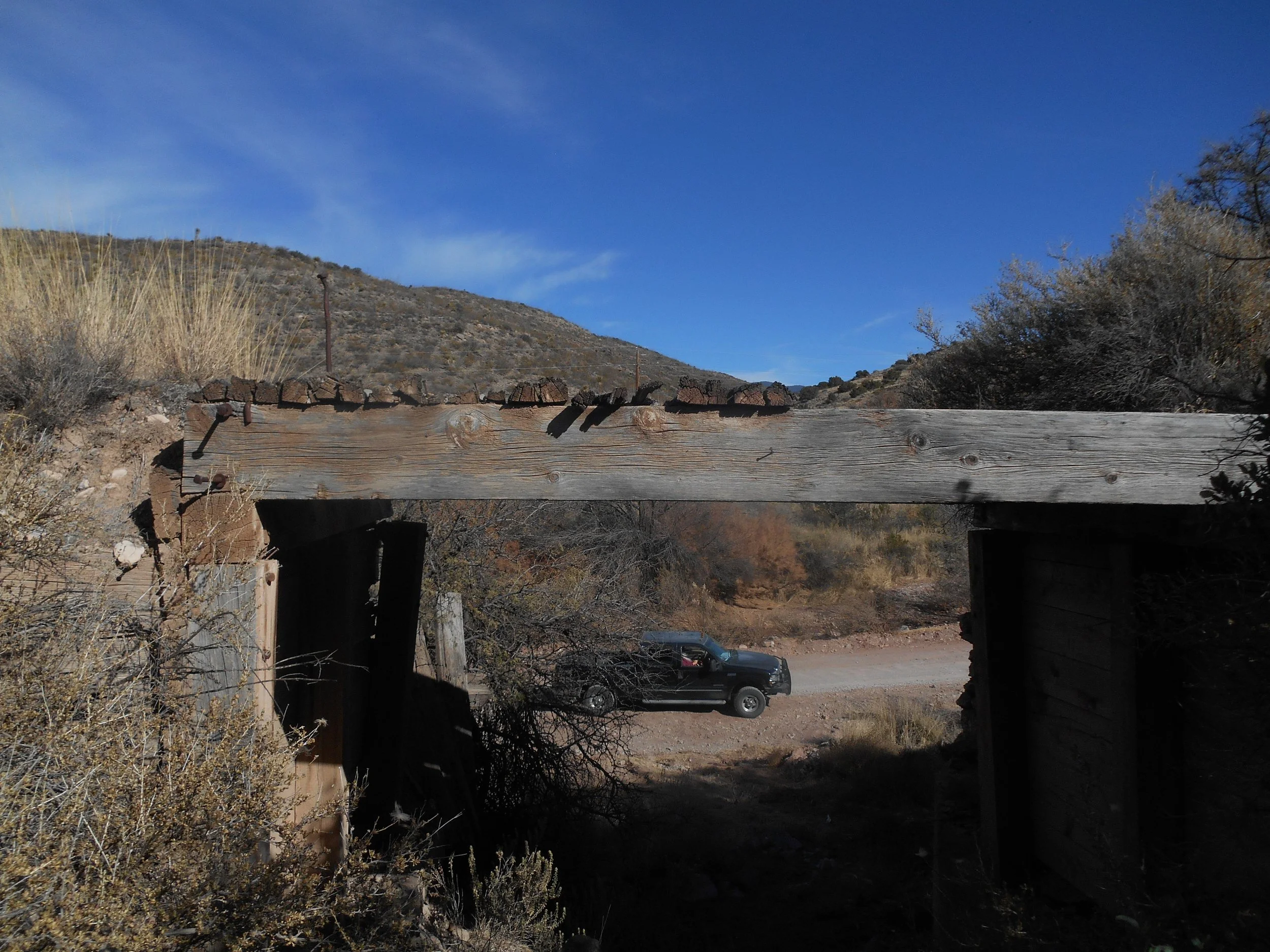
There are many other bridge atructures left from the construction and operation of the Alamogordo & Sacramento Mountain Railroad including several in Salado Canyon where the rails to trails group has performed a lot of restoration and preservation work. Photo by Robby Peartree.
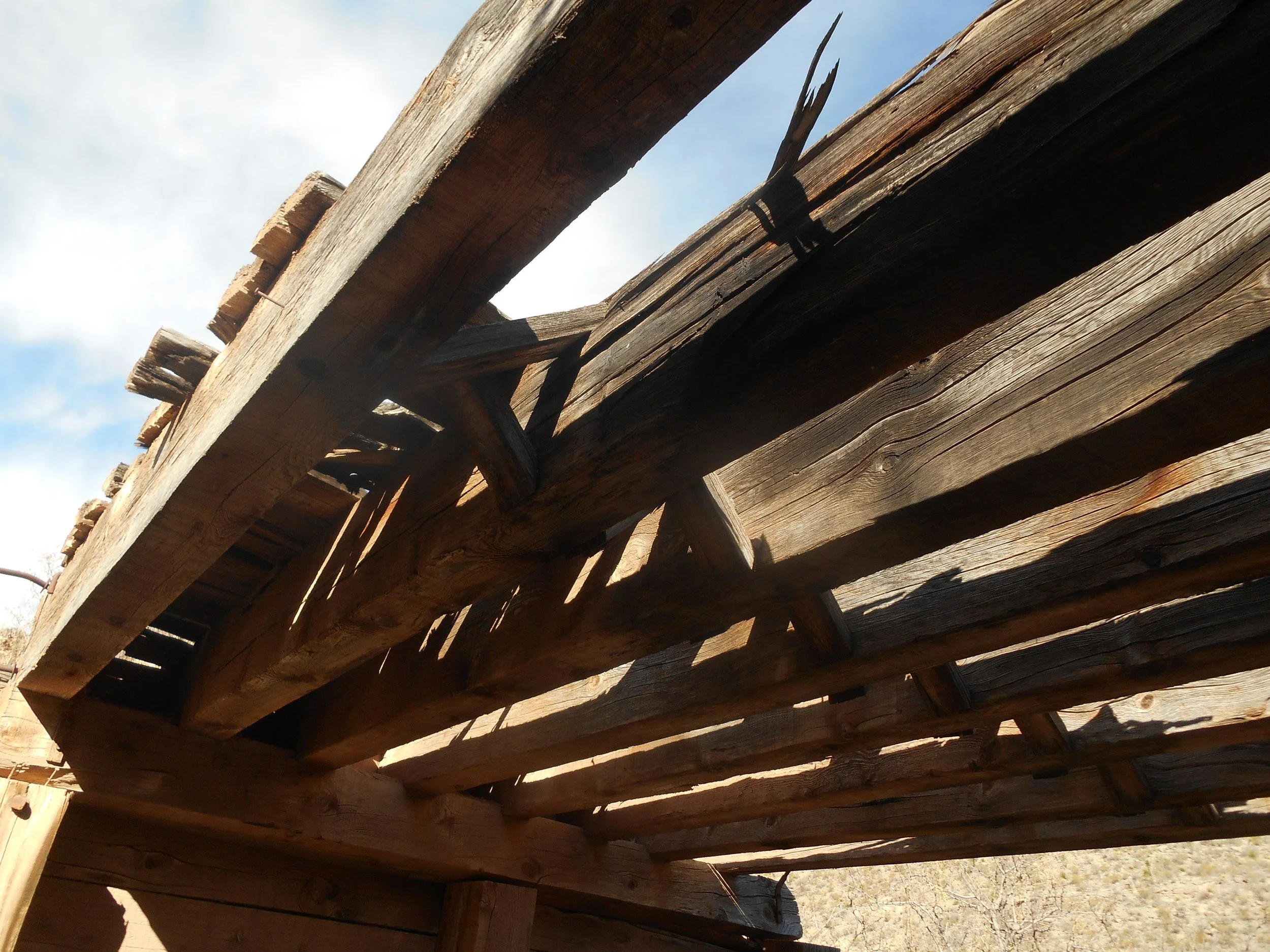
A detail view of one of the above bridge structure showing what still remains. Photo by Robby Peartree.
1902
El Paso & Southwestern Rio Grande Bridge
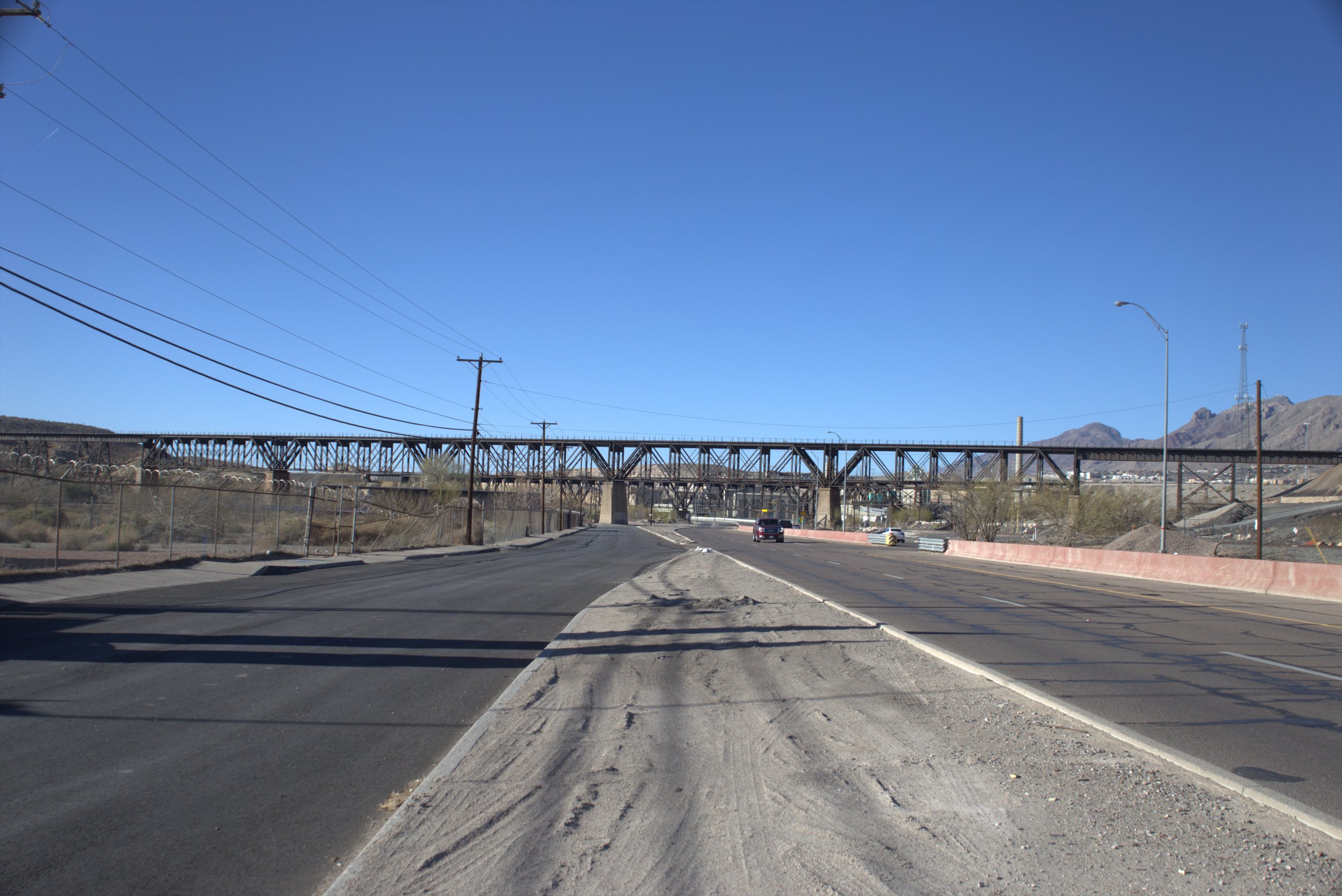
The arrival of the El Paso & Southwestern (EP&SW) was the last significant regional railroad to reach El Paso. In 1900 Phelps Dodge was frustrated with the rates to deliver friht cars that the Southern Pacific (SP) was charging to Benson, Arizona, where the copper company interchnged with the SP. Phelps Dodge announced that they were expanding their railroad empire from Douglas to Deming, New Mexico, and El Paso, Texas. The first section of the expanding Arizona copper mining railroad completed was the section between Deming and Douglas. The EP&SW completed construction of the bridge in 1902. The initial surveyed route into El Paso became a court case between the SP and the EP&SW which the EP&SW lost. Armed conflict between the EP&SW and the SP also took place at Deming.
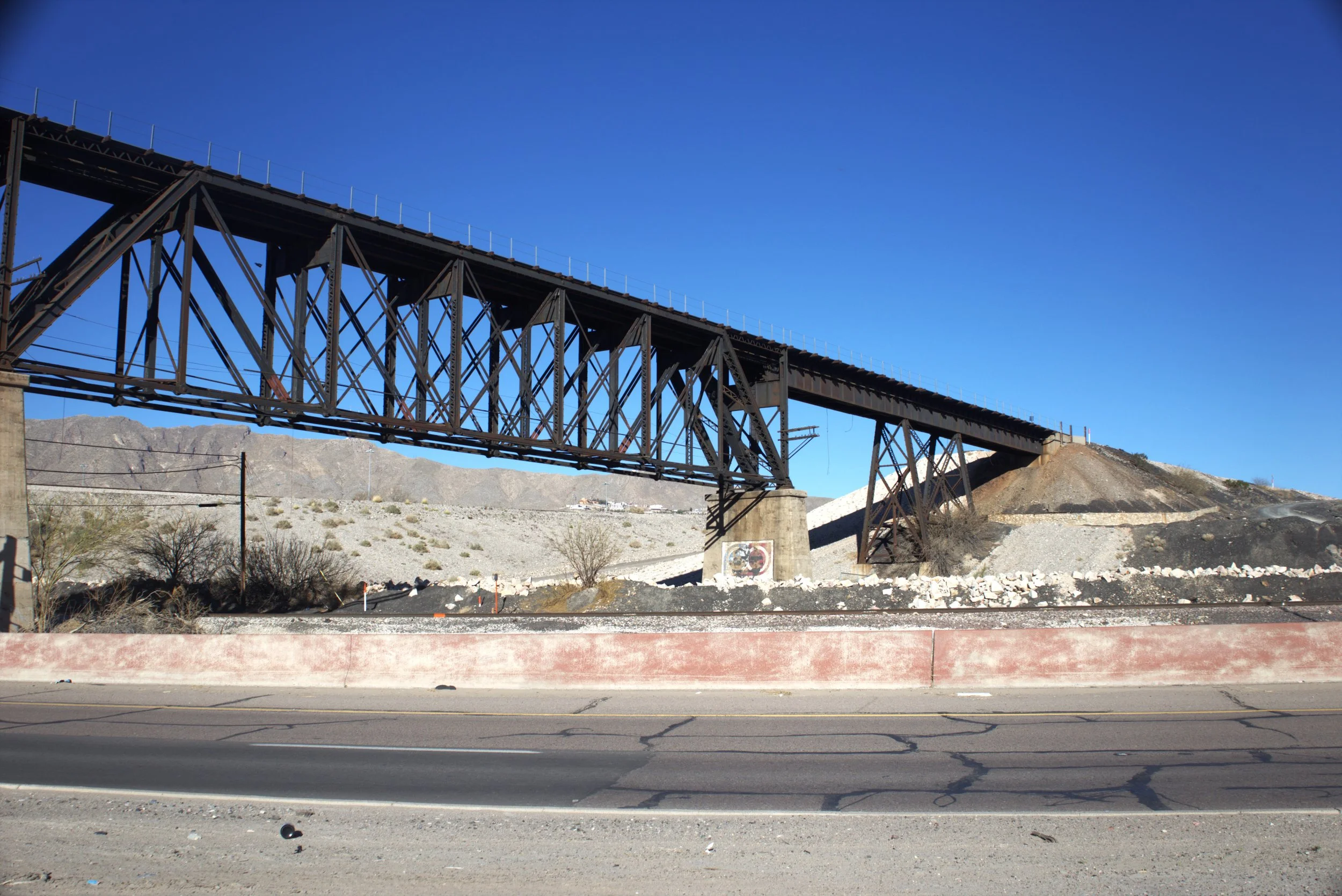
The first EP&SW train to operate between El Paso & Douglas completed the jouney in February 1902. The EP&SW operated over the Aitchison, Topeka & Santa Fe to reach Deming. The last part of this expansion to be completed was a tunnel just west of the bridge in November 1902. The arrival of construction crews in 1901 caused a lot of issues as property was condemmed for the construction of the new line. Other construction activities in El Paso caused a housing shortage at the time.
The line west would become important to the movement of US troops during the Punitive Expedition after the raid on Columbus New Mexico by forces loyal to Pancho Via. This and the SP Rio Grande Bridge would receive guarded protection during both world wars.
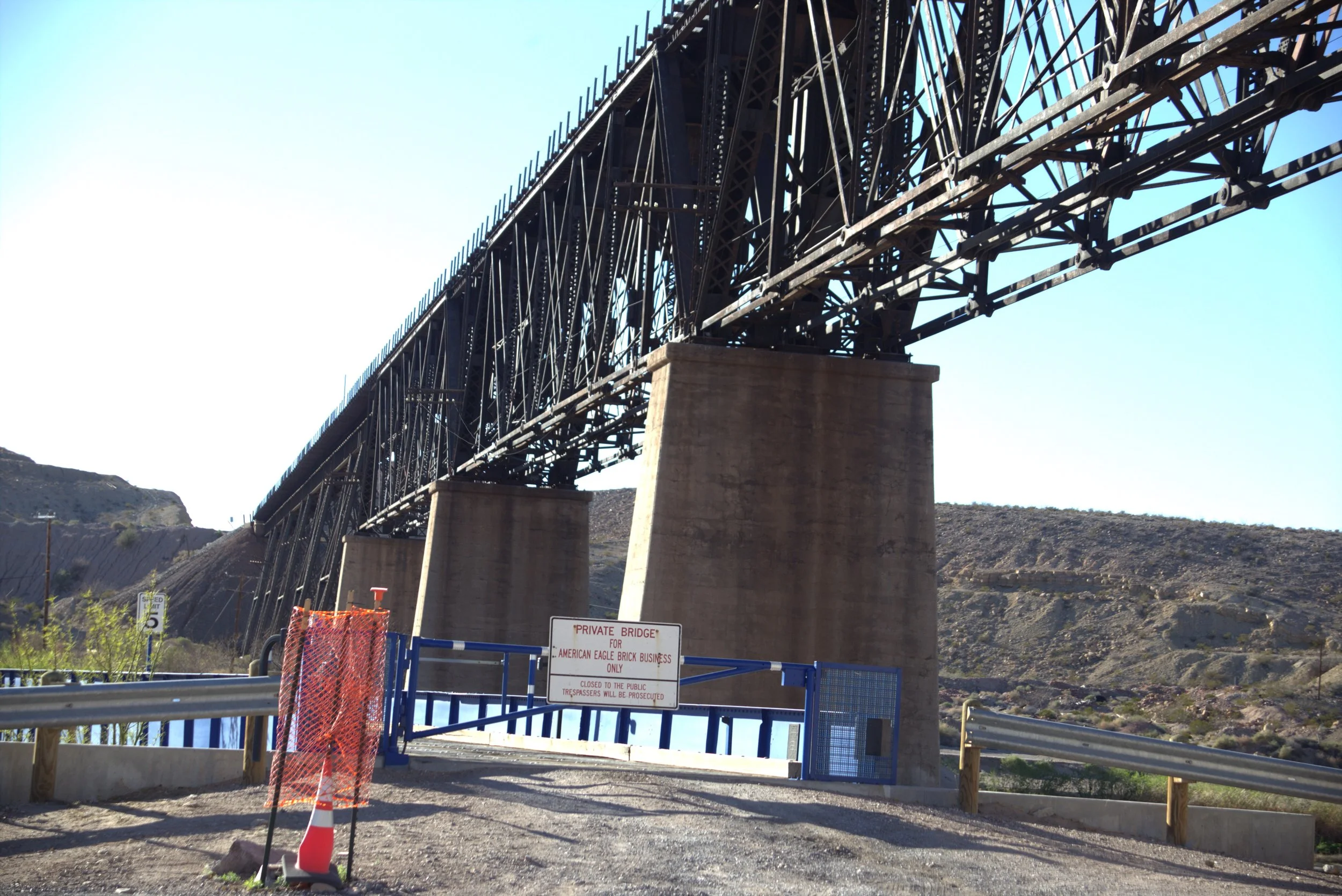
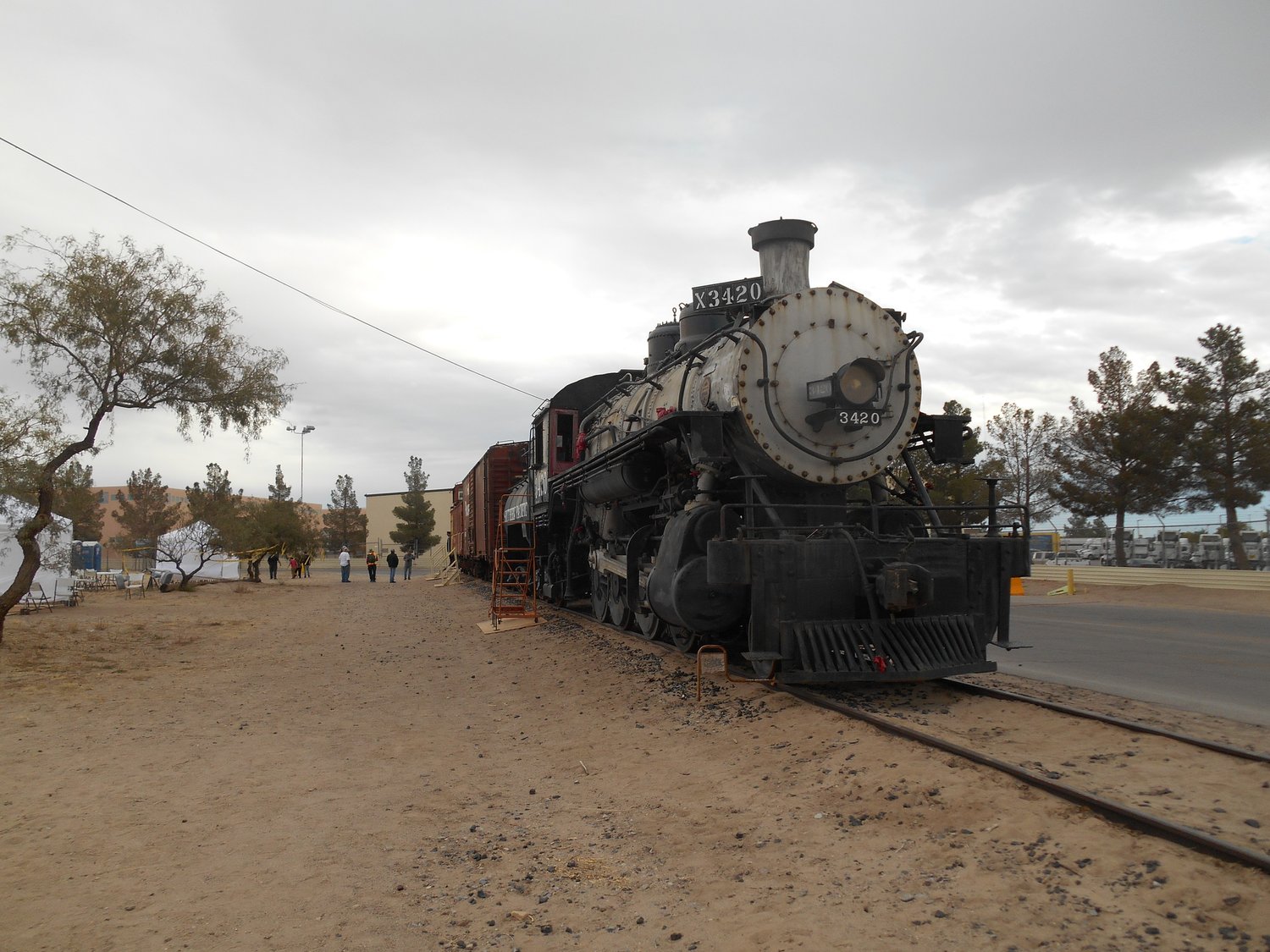
In 1924 the SP purchased the EP&SW. On Sepember 11, 1996 Union Pacific (UP) merged with the SP. The bridge still is a vital part of the national rail network. Today the structure is a part of the busy Sunset Route. Notible steam locomotive to operate over the bridge include EP&SW #1, SP 3420, and SP4449 while the locomotives were still in service. The bridge would have carried some of the largest power on the SP including the cab foward locomotives. Surprising to many, SP MT-2 class locomotives required the heaviest rail to operate of any steam locomotive class on the SP and the MT-2 were designed by the EP&SW. Since the end of steam on the SP Union Pacific has operated “BigBoy” 4014 over the bridge. A reason why old bridges continue to serve on the modern railroad is that the modern diesel locomotive does not cuse the same bridge loading that steam locomotive cause.
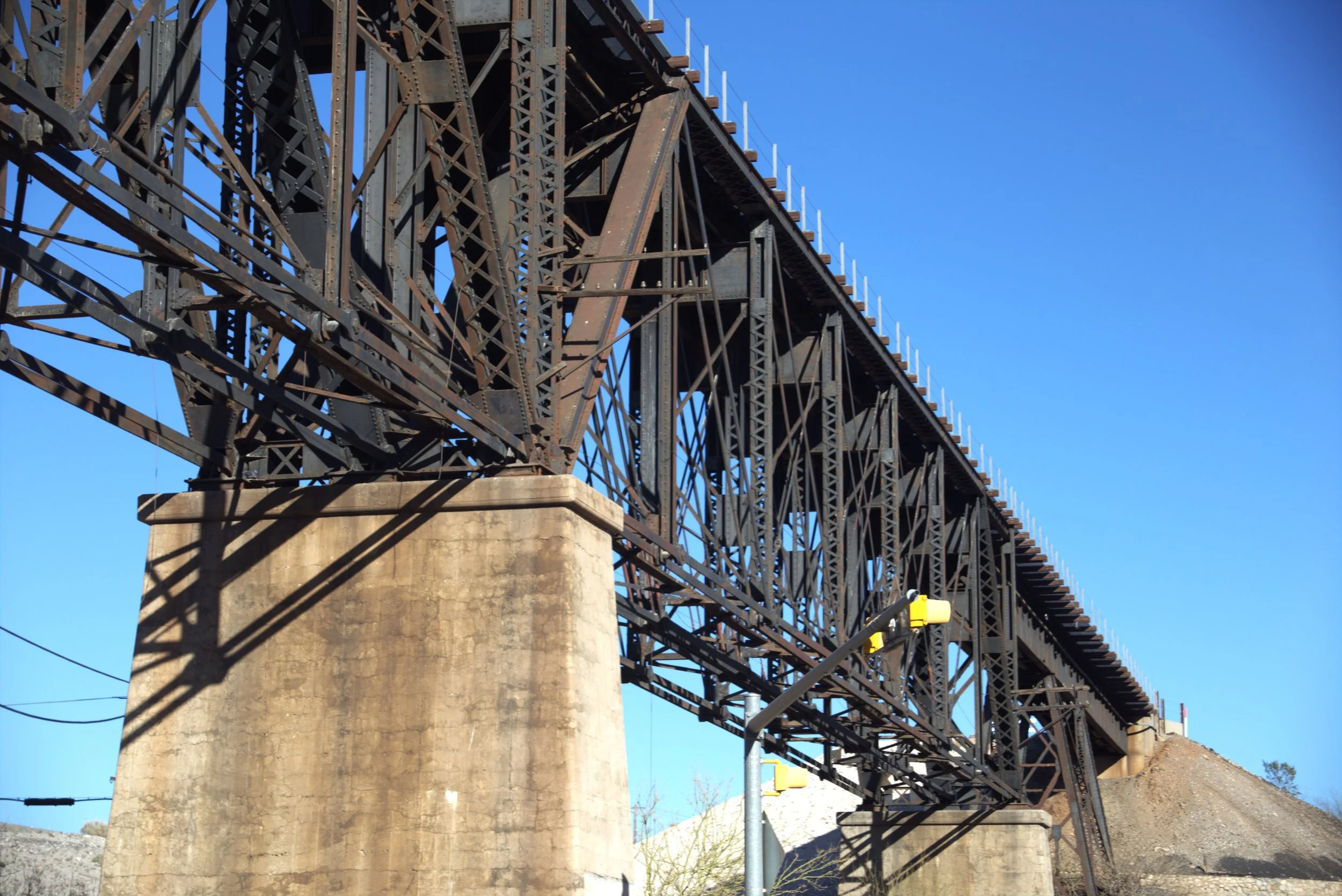
1902
El Paso & Southwestern Freighthouse El Paso, Texas
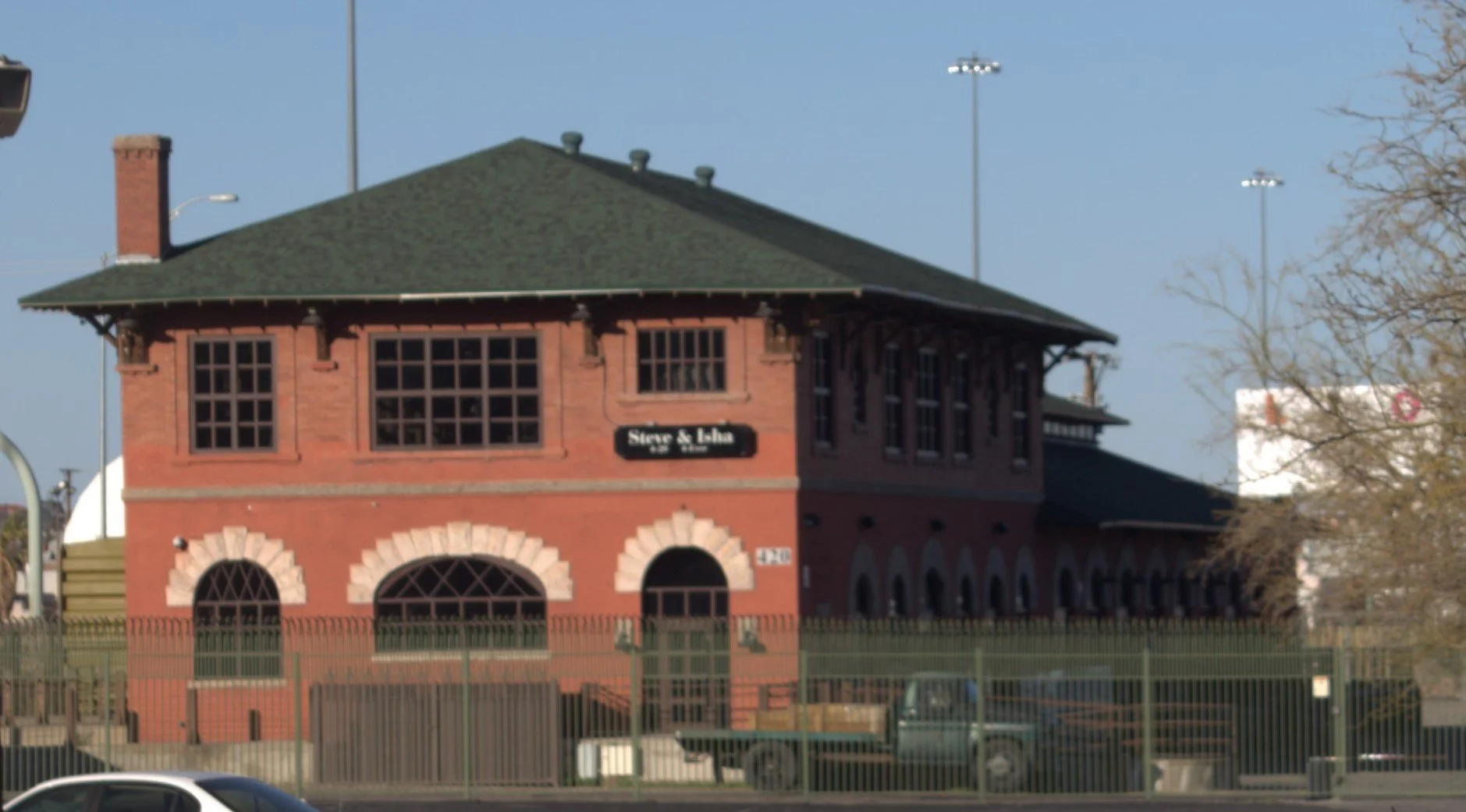
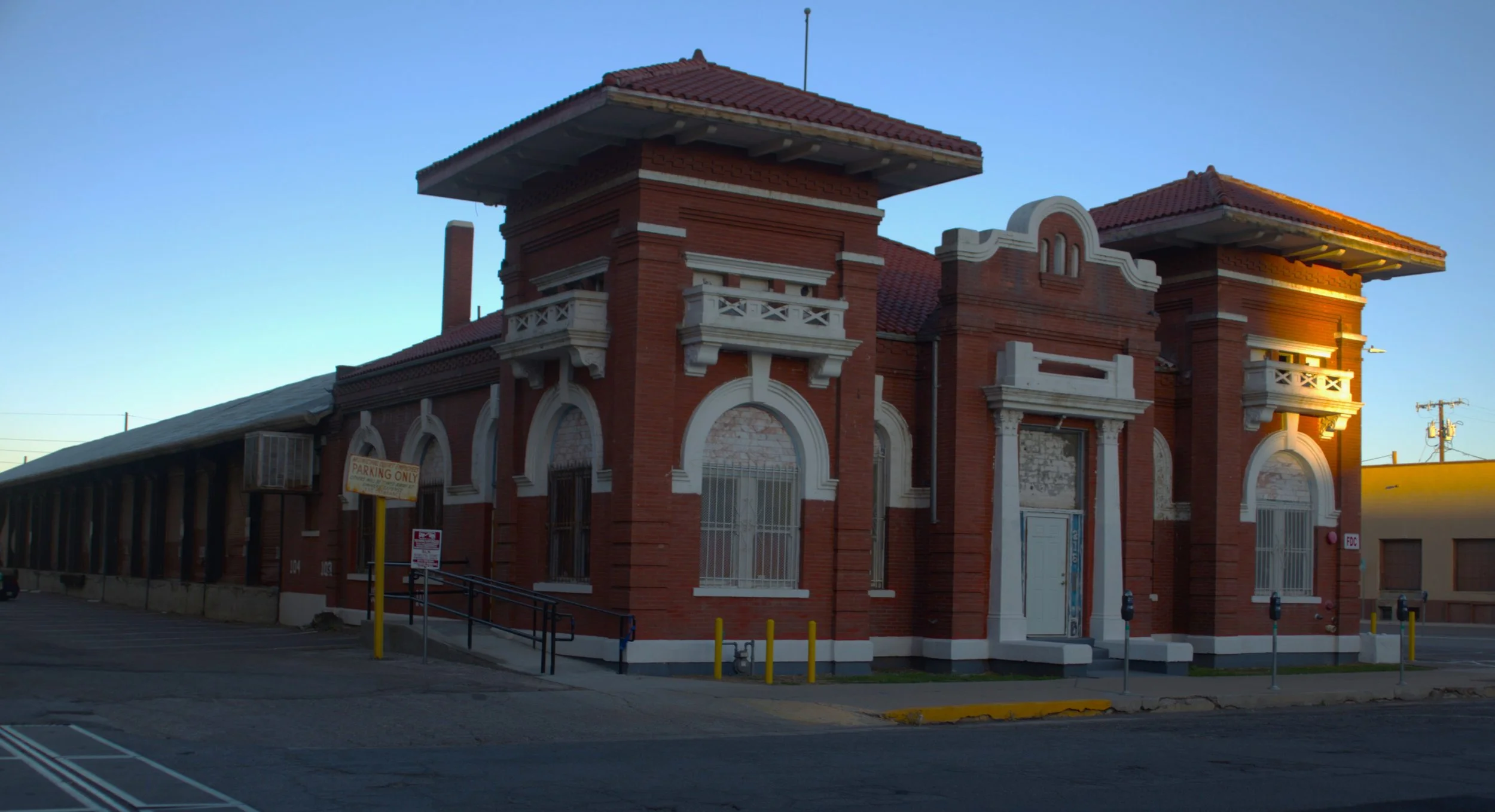
The most visable of the three remaining freighthouses in El Paso, Texas. The El Paso & Southwestern (EP&SW) Freighthouse is the oldest remaining railroad freighthouse in El Paso. Designed by EP&SW Engineer Perkins, construction began in November 1901. The freighthouse is one of the oldest railroad structures still in existance in El Paso. As the freighthouse was constructed prior to the completion of El Paso Union Depot (EPUD), the freighthouse also acted as the passenger depot for the EP&SW during its early years.
After the construction of EPUD, the building was used to host special passenger movements until legal action was threatened. In 1924 the EP&SW would display their newest locomotive purchase near the building just two days before the Southern Pacific (SP) tookover the EP&SW. In 1946, the American Freedom train was displayed by the building.
The building received a city historical overlay in 1994.
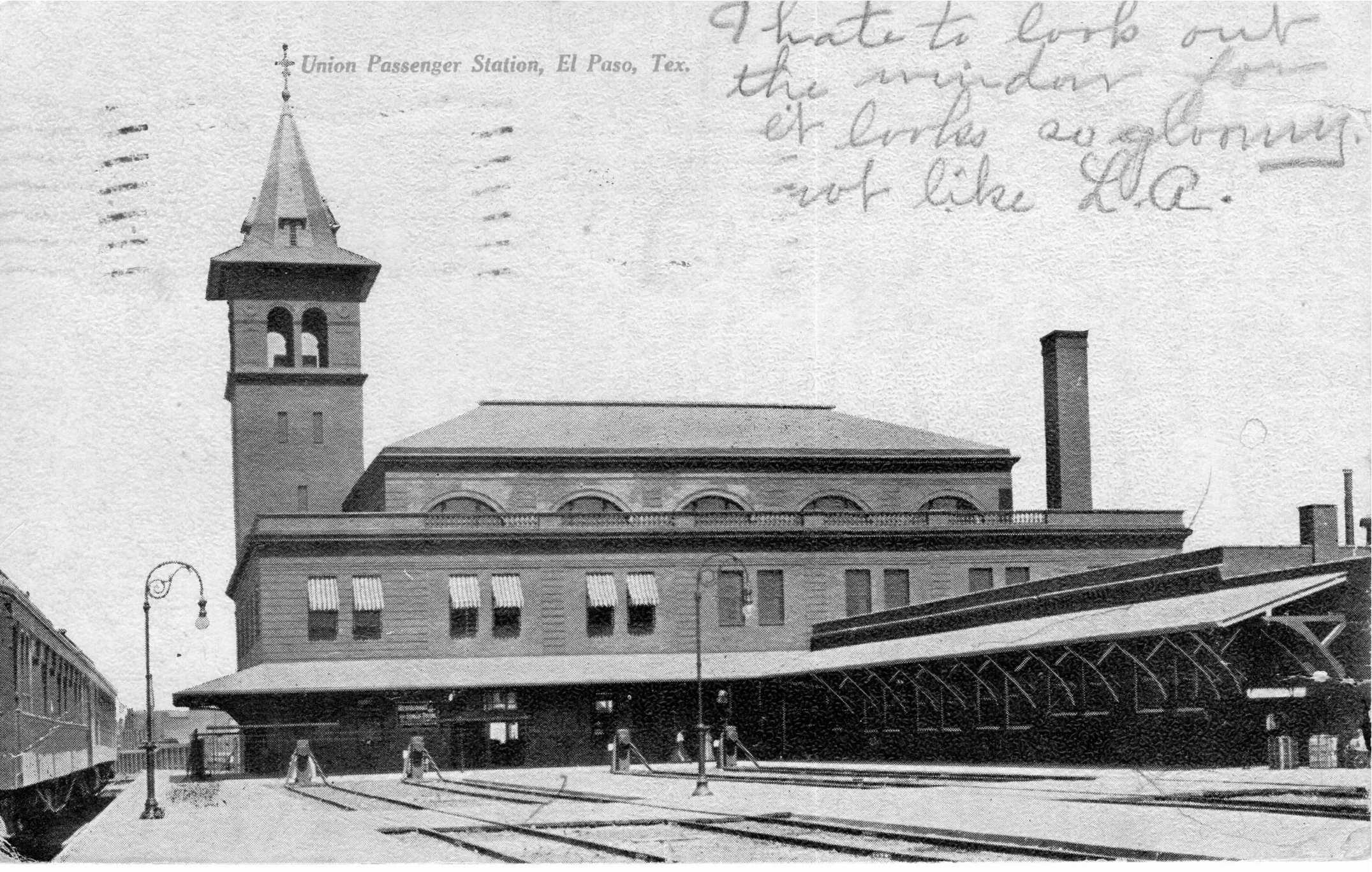
El Paso Union depot
1906
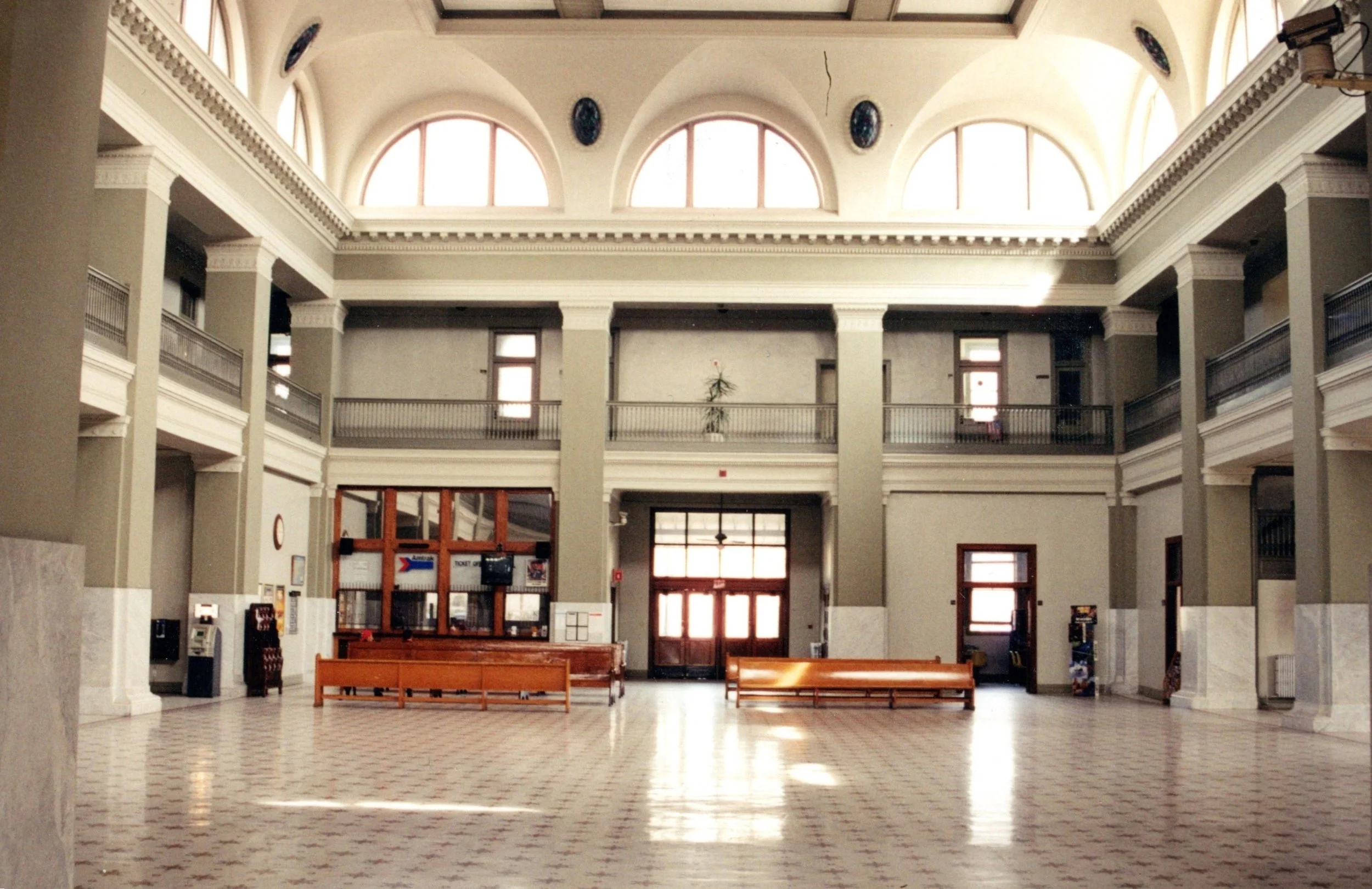
Several politically connected groups lobbied for the creation of El Paso Union Depot (EPUD) before the terminal was built. Initial survey work started were underway by 1901. The two leading sites for the EPUD was the intersection of San Francisco and Durango Streets and at the bottom of Staton Street where it interected the Franklin Canal. The location at the intersection of San Francico and Durango Streets became the final site. In 1901 the Texas & Pacific and the El Paso & Northeastern would need aditional trackage rights over the Southern Pacific (SP) to reach the site.
Initial design work was started by El Paso & Southwestern (EP&SW) engineer F. H. Perkins. The building we have today was designed by Chicago Architect D.H. Burnham. Construction was completed in February 1906. A party was held in the building on the 28th and the building became an active rail terminal on March 1, 1906.
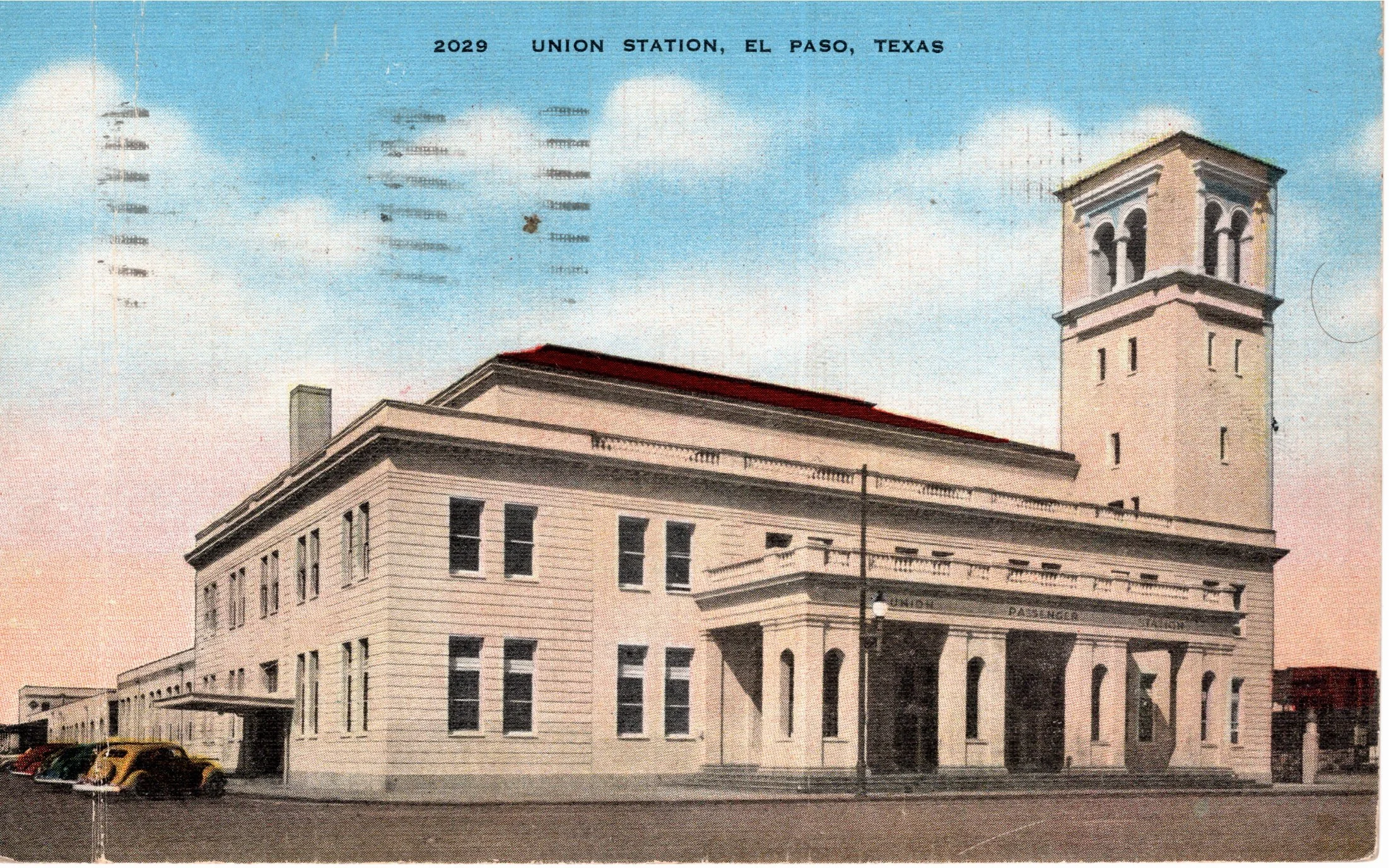
The building was a terminal for passenger trains from both sides of the border with the Mexican Central trains reaching EPUD via the Atchison Topeka & Santa Fe yard. During the Mexican Civil War of the 1910s, the international service was suspended. Both the EP&SW and the SP provided the Mexican Government troop trains on the US side of the Border. During the reat War, (WWI) a large shower was constructed adjacent to the depot for the use of traveling service personel. During WWI the US government took over the operational control of the important national railroads. During this time all passenger locomotives were serviced at the AT&SF roundhouse.
The new Los Angeles Union Passenger Terminal in Los Angeles, California which opened on May 3 1939, would feature a “Southwest” architecture style. This would influence the facelift of EPUD in following years of 1940-1942.
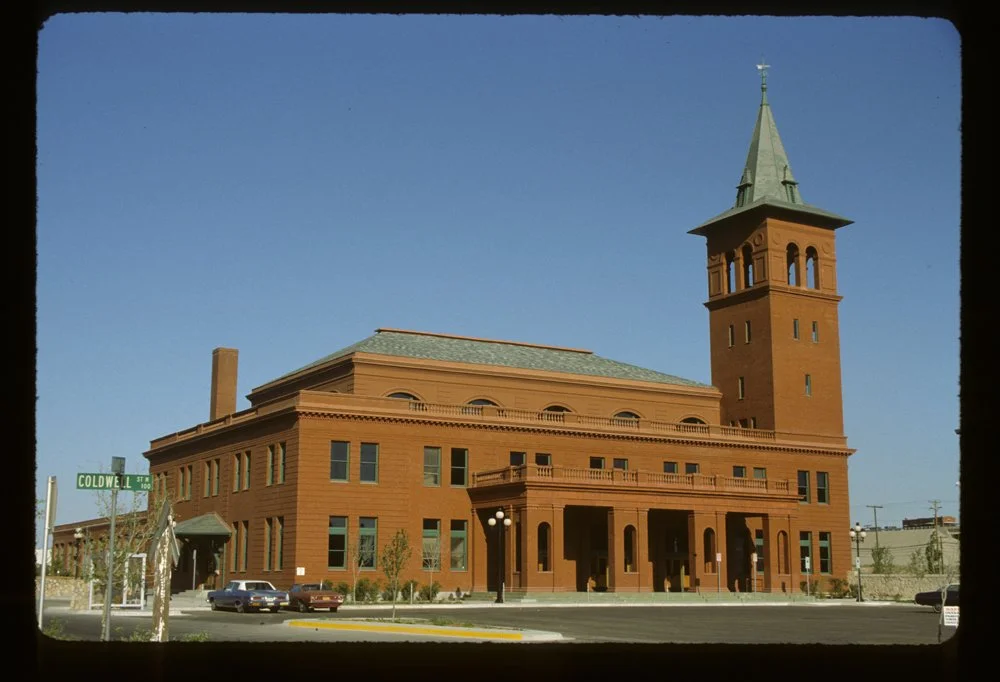
The building continued to serve as a passenger terminal. The National Railways of Mexico discontinued use of the building in the late 1950s. The T&P, and the AT&SF started to file with government regulators in 1966 to end their service out of the building. Only the Sunset Limited survived the creation of Amtrak. In the 1970s there was serious discussions about tearing down the building. Instead a restoration, funded by federal dollars, took place. The restoration work was overseen by retired Army Lt. Cornel Robert M. Kelly.
1905-1907
El Paso & Southwestern General Office Building
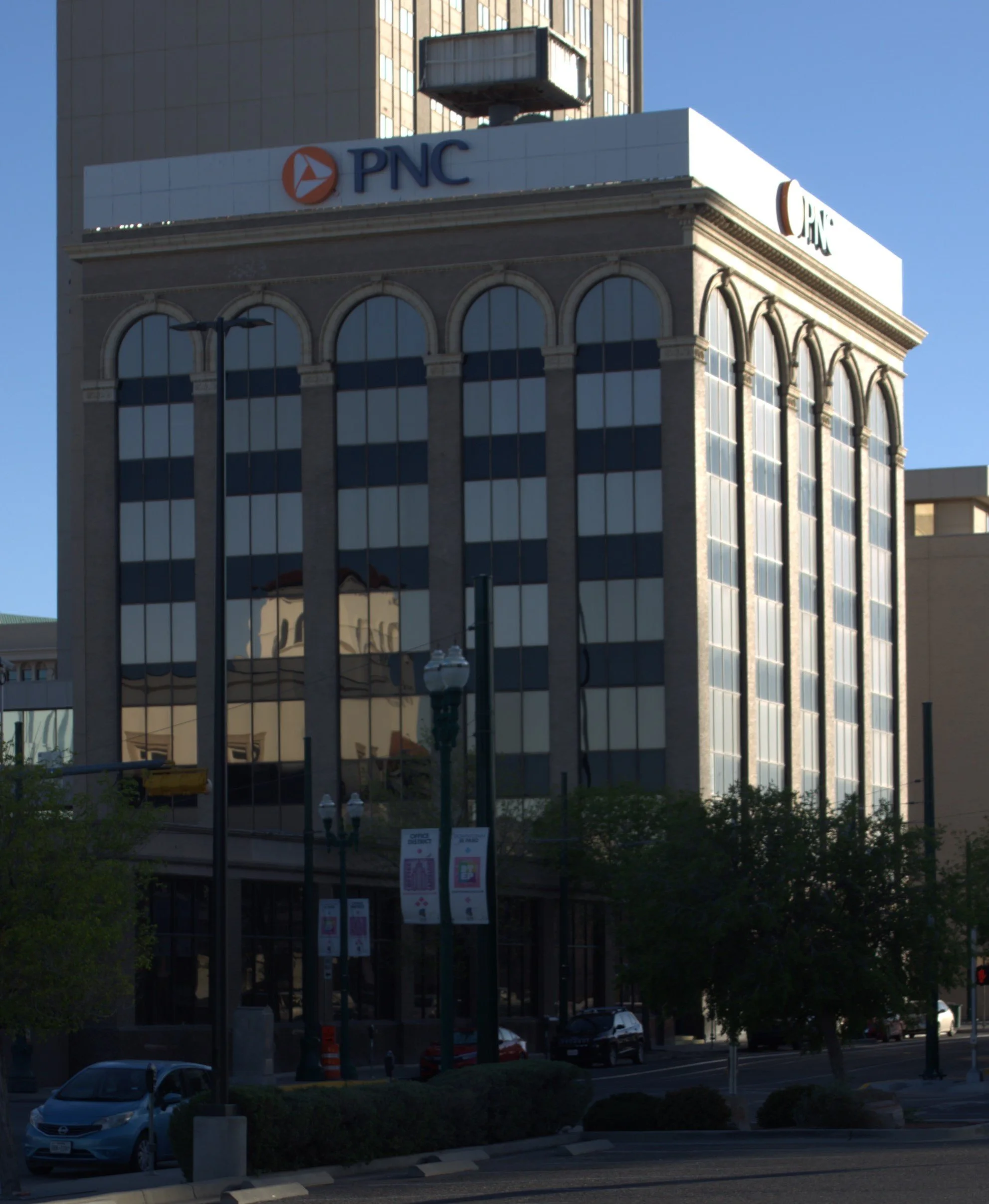
The El Paso & Southwestern Railroad(EP&SW) moved their headquarters operations from Bisbee, Arizona to El Paso, Texas starting in July 1901. Their offices were located at the intersection of Cambell and Franklin Streets. On October 16, 1905, construction began at Franklin and Staton Streets on a new 7-story office building. At the time the office building was the largest building to be built. Construction continued in 1906 and into 1907. Different railroad departments started moving in in October 1907.
1912
texas & Pacific Freighthouse El Paso, Texas

1925-1926
Southern Pacific concrete coaling towers
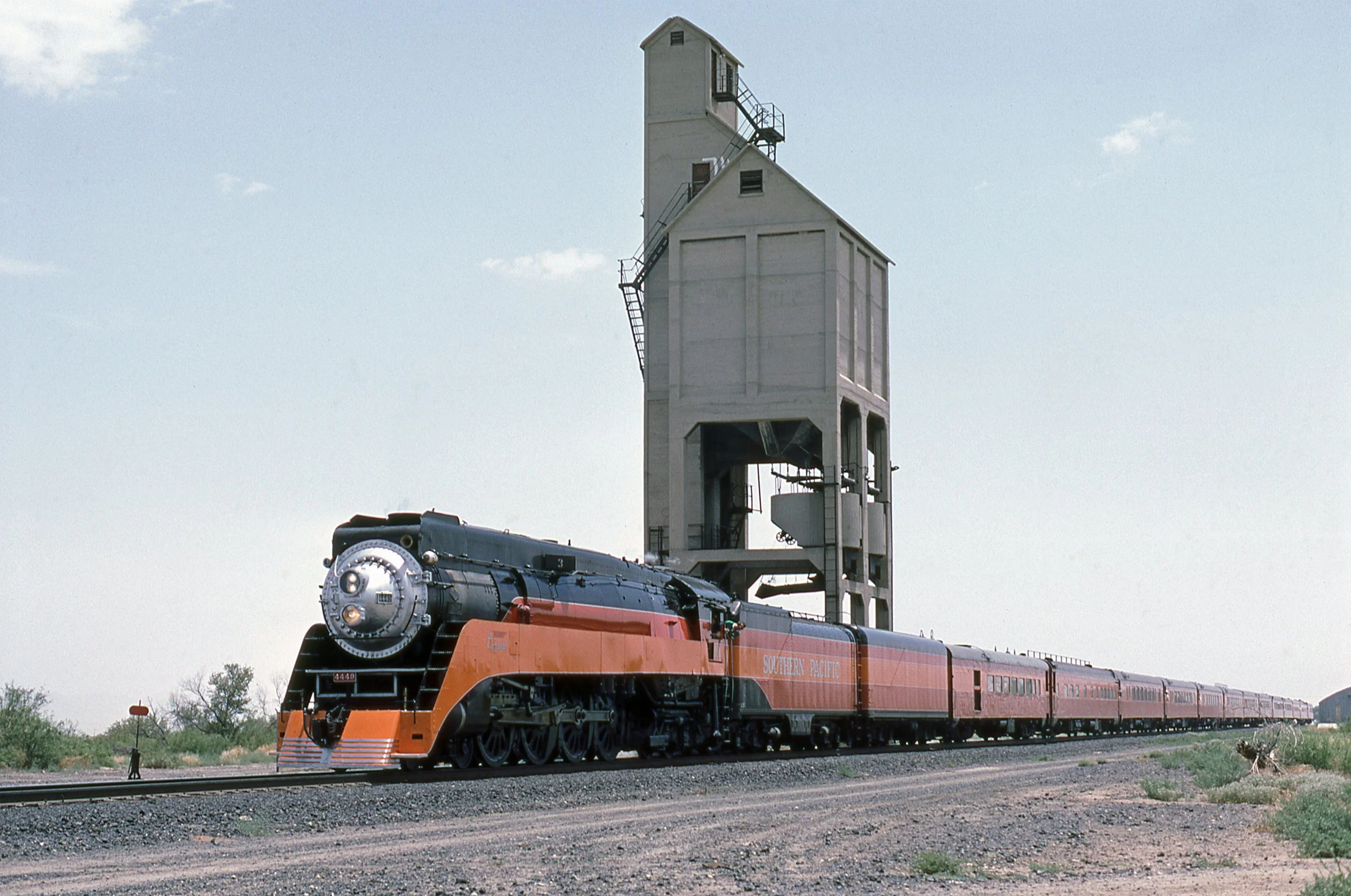
Prior to the purchase of the El Paso & Southwestern (EP&SW), the Southern Pacific (SP) promoted its use of oil burning steam locomotives. The SP started building concrete coaling towers after the purchase of the EP&SW in 1925 and 1926. Concrete coaling towers were constructed at several locations including Deming and Lordsburg in New Mexico. In Arizona concrete coaling towers were constructed at several San Simmon, Bowie, and Benson, and Mescal. The above photo was taken in 1984 when SP 4449 was returning to Portland Oregon after traveling to the 1984 Louisianna World’s Fair. Union Pacific would tear down the structures after taking over the SP.
1926
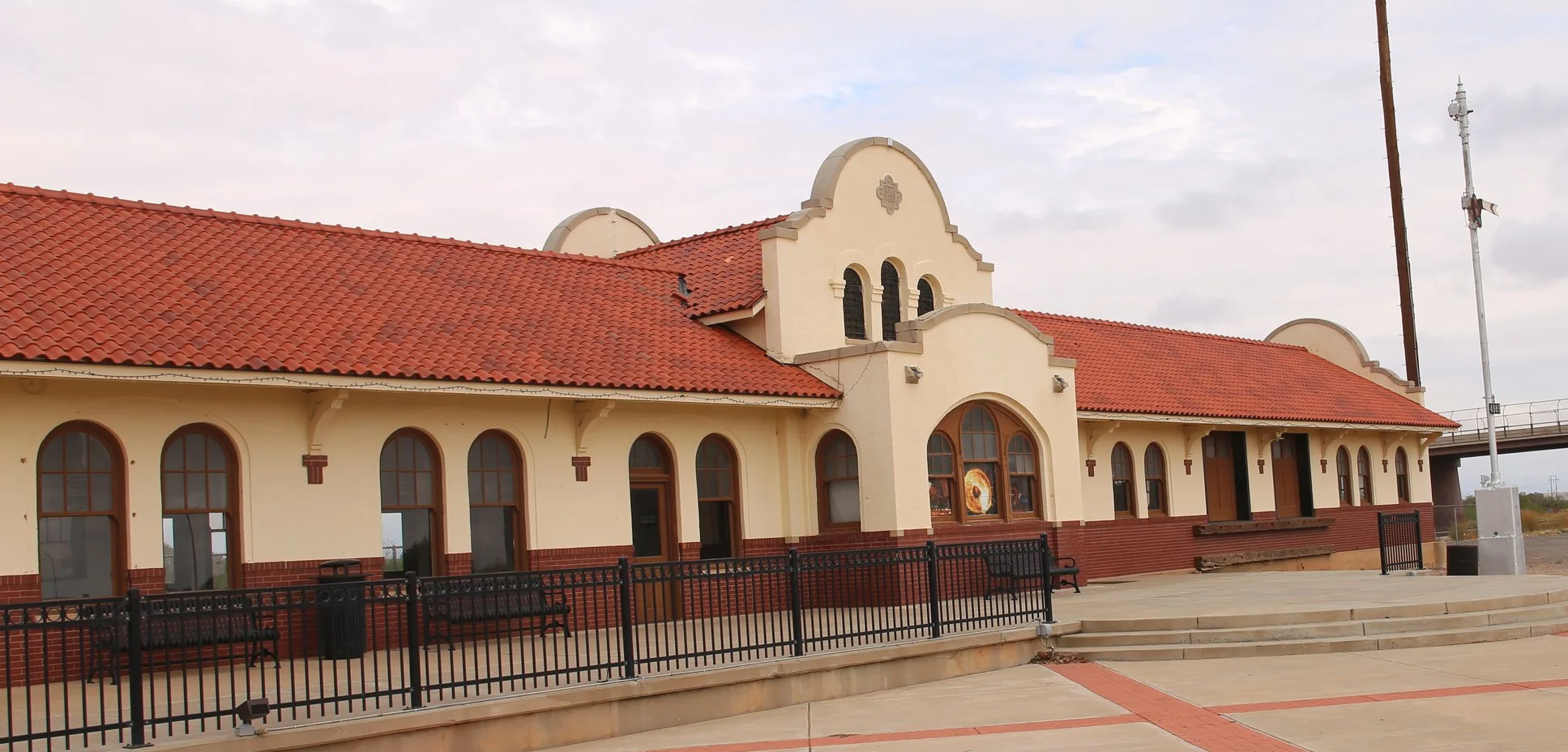
Tucumcari Railrod Depot
Tucumcari Railroad Museum
1942
Santa Fe Freighthouse El Paso, Texas
The Atchison, Topeka & Santa Fe (AT&SF) construction crews completed construction of the mainline into El Paso in June 1881. Train service started on July 1, 1881. Part of the initial construction of the AT&SF at El Paso was a freight house that the Las Vegas, New Mexico paper reported to be 100 feet (30.48 meters) by 28 feet (8.53 meters) in size. The AT&SF did not begin to replace this temporary structure until 1941. The curuuent AT&SF freight house was dedicated in March 1942.
1967
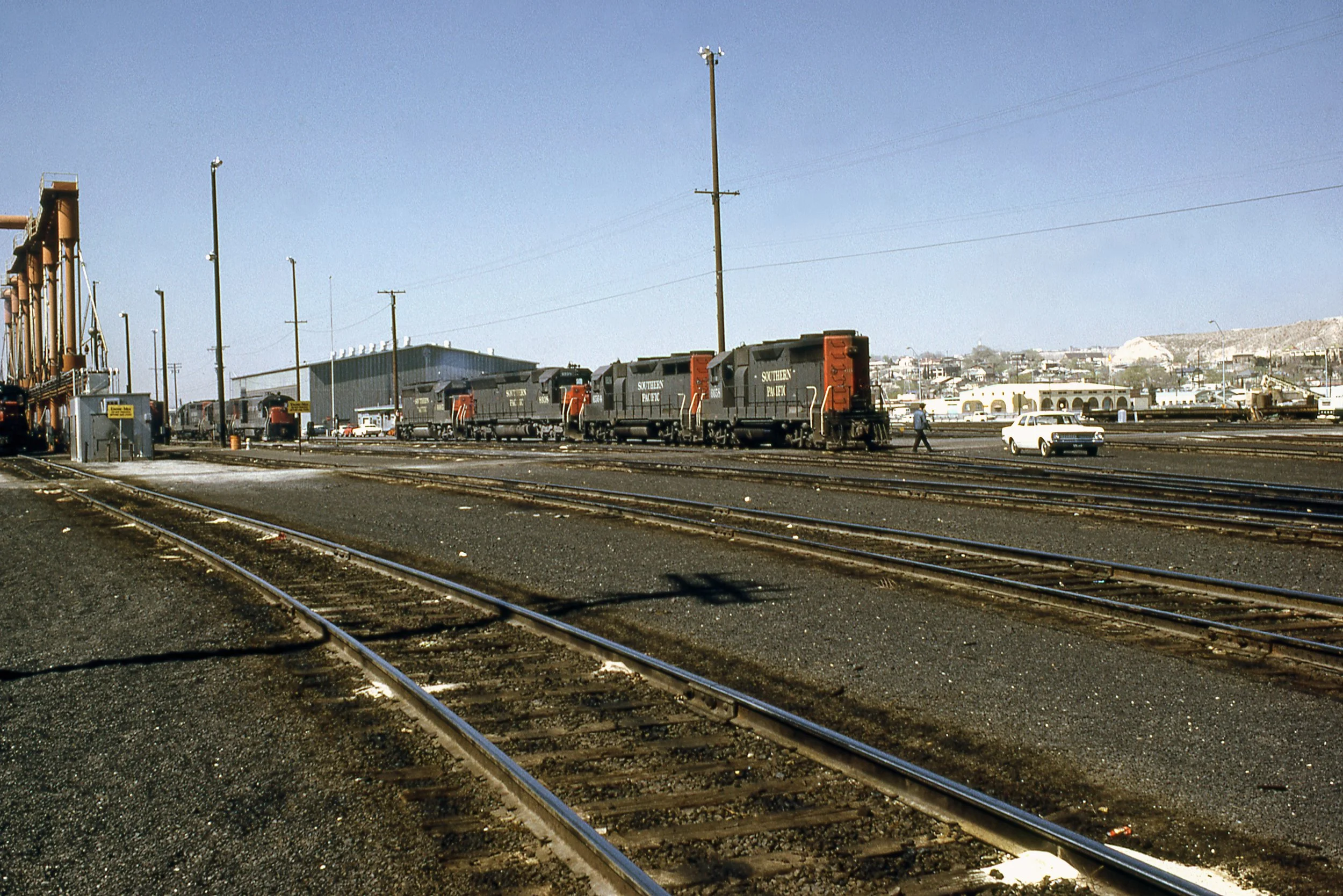
Southern Pacific locomotive plant
